Complete Guide to Employee Leave Management for Small Businesses
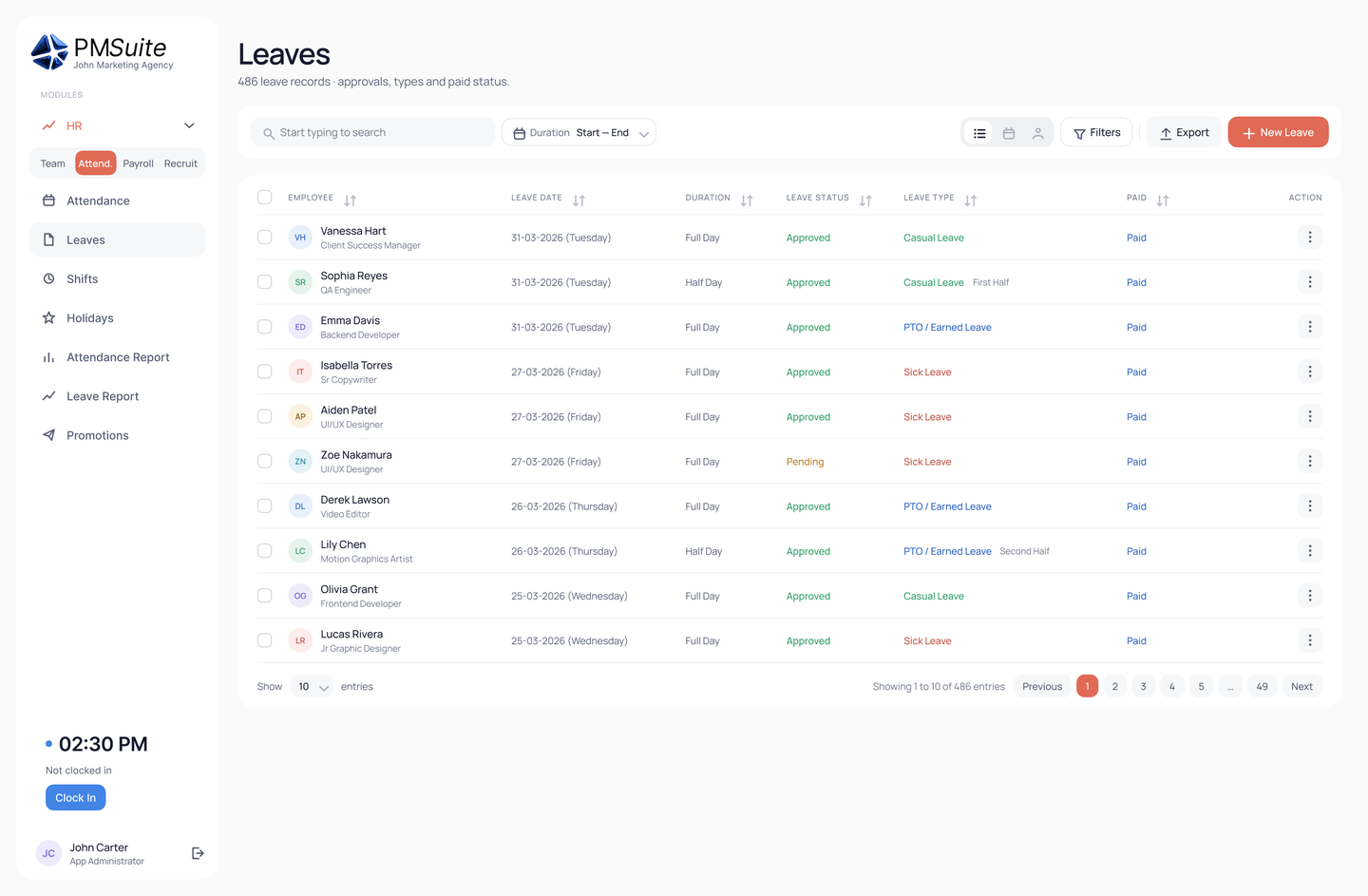
Managing employee leave is one of the most complex and consequential aspects of running a business. From PTO policies to FMLA compliance, the landscape of leave management involves legal requirements, employee expectations, and operational challenges that small businesses must navigate carefully. This comprehensive guide covers everything you need to know about building a leave management system that keeps employees satisfied while protecting your business.
Poor leave management creates problems on multiple fronts. Inconsistent policy application exposes you to discrimination claims. Inadequate tracking leads to abuse and disputes. Failure to comply with federal and state requirements results in penalties and lawsuits. Conversely, effective leave management increases employee satisfaction, improves retention, and reduces legal risk while ensuring operational continuity.
Understanding Types of Employee Leave
Employee leave encompasses numerous categories, each with different legal requirements and policy considerations. Understanding these distinctions is essential for creating comprehensive policies and ensuring compliance. Some leave types are legally mandated while others represent competitive benefits you choose to offer.
Paid time off (PTO) consolidates traditional vacation, sick leave, and personal days into a single bank of paid leave that employees can use for any purpose. This approach simplifies administration and gives employees flexibility while eliminating discussions about whether a particular absence qualifies for sick versus personal time.
Legally Mandated Leave
Federal law requires certain types of leave. The Family and Medical Leave Act (FMLA) mandates up to 12 weeks of unpaid, job-protected leave annually for qualifying employees at businesses with 50 or more employees. Qualifying reasons include birth or adoption, caring for a family member with a serious health condition, or the employee's own serious health condition.
Military leave under USERRA provides job protection for employees serving in the armed forces, including National Guard and Reserve members. Jury duty leave protects employees serving as jurors, though requirements for pay vary by state. Voting leave, witness duty, and emergency responder leave apply in various jurisdictions.
State laws often expand federal requirements or create entirely new leave categories. California, New York, and other states have paid family leave programs. Many jurisdictions mandate paid sick leave. Some require leave for domestic violence situations, school activities, or organ donation. Keeping track of applicable requirements in your state is essential.
Common Leave Types
- Vacation/PTO - Employee rest and personal time
- Sick leave - Personal illness or medical appointments
- FMLA - Family and medical leave (unpaid, job-protected)
- Parental leave - Birth, adoption, or foster care
- Bereavement - Death of family members
- Jury duty - Court service obligations
- Military leave - Active duty or training
Creating Effective Leave Policies
Your leave policy serves as the foundation for all leave management activities. A well-crafted policy clearly communicates employee entitlements, establishes procedures for requesting and approving leave, and protects your business from disputes and legal challenges. Policies should be comprehensive yet understandable, covering all scenarios while remaining accessible to employees.
Start by determining your philosophy around leave. Some organizations take a generous approach, viewing leave as an investment in employee wellbeing and productivity. Others maintain more conservative policies focused on operational needs. There's no single right answer, but your approach should align with your values, competitive positioning, and operational requirements.
PTO Accrual Systems
Accrual systems determine how employees earn leave time. Traditional accrual provides leave based on time worked—typically hours or pay periods. Front-loaded policies provide the full annual allotment at the beginning of each year. Hybrid approaches might front-load some leave while requiring accrual for additional time.
Each approach has trade-offs. Accrual systems prevent employees from using a full year's leave then departing, but require ongoing tracking. Front-loaded systems simplify administration but create liability for employees who leave mid-year. Consider your workforce stability and administrative capabilities when choosing.
Carryover policies determine whether unused leave transfers to the next year. "Use it or lose it" policies encourage regular leave-taking but may create end-of-year rushes. Unlimited carryover creates growing liabilities and may indicate employees aren't taking needed rest. Capped carryover balances flexibility with responsible leave usage.
Request and Approval Procedures
Clear procedures for requesting leave reduce confusion and conflict. Specify how far in advance requests should be submitted for planned leave, who approves requests, and how conflicts between employees are resolved. Document the process in your policy and train managers on consistent application.
Balance employee flexibility with operational needs. While you can require reasonable advance notice for vacation, excessive restrictions frustrate employees and may violate laws regarding sick leave usage. Procedures for unplanned absences—such as calling in sick—should be practical while maintaining accountability.

Modern leave management systems streamline request submission and approval workflows.
FMLA Compliance for Small Businesses
The Family and Medical Leave Act creates significant obligations for covered employers. While only businesses with 50 or more employees within 75 miles are covered, understanding FMLA is important even for smaller businesses that may grow into coverage or that want to voluntarily provide similar protections.
Eligible employees—those who have worked for you at least 12 months and 1,250 hours in the preceding year—are entitled to up to 12 weeks of unpaid, job-protected leave for qualifying reasons. These include birth or adoption of a child, caring for a spouse, child, or parent with a serious health condition, or the employee's own serious health condition that prevents work.
FMLA Administration
Proper FMLA administration involves specific notice requirements and documentation. When an employee requests leave that may qualify as FMLA, you must provide eligibility notice within five business days. If the leave qualifies, you must provide a designation notice specifying that the absence counts against FMLA entitlement.
Medical certification requirements allow you to obtain documentation from healthcare providers to verify the need for leave. You may require certification initially and periodically thereafter for ongoing conditions. The certification process must comply with HIPAA and should not request diagnosis information—only information necessary to verify FMLA qualification.
Intermittent leave creates particular challenges. Employees may take FMLA in increments as small as one hour when medically necessary. Track these absences carefully, as they count against the annual 12-week entitlement. Consider requiring employees to follow normal call-in procedures and to make reasonable efforts to schedule treatment around work requirements.
Job Protection and Benefits
Employees returning from FMLA leave must be restored to their original position or an equivalent role with the same pay, benefits, and terms of employment. You cannot retaliate against employees for exercising FMLA rights, and any coincidental negative employment actions require careful documentation showing unrelated justification.
During FMLA leave, you must maintain group health insurance coverage under the same conditions as if the employee were working. The employee remains responsible for their share of premium costs. If an employee fails to return after FMLA leave, you may recover premiums you paid unless the failure to return was beyond their control.
State and Local Leave Requirements
Beyond federal requirements, state and local laws create additional leave obligations. These vary dramatically by jurisdiction, making compliance challenging for businesses operating in multiple locations. Stay current on requirements in every location where you have employees.
Paid sick leave laws have proliferated in recent years. States including California, New York, New Jersey, and many others require employers to provide paid sick time, typically accruing at one hour for every 30 hours worked. Requirements for usage, carryover, and payout upon termination vary significantly.
Paid Family and Medical Leave
Several states have implemented paid family and medical leave programs. California, New Jersey, New York, Washington, and Massachusetts have active programs, with others phasing in. These programs typically provide partial wage replacement during leave for family or medical reasons, funded through payroll taxes on employees, employers, or both.
Understanding the interaction between state programs and your policies is essential. State programs may run concurrently with FMLA, extending job protection while providing wage replacement. Your policies should address how company-provided paid leave coordinates with state benefits to avoid either gaps or excessive combined payments.
Additional State-Mandated Leave
Various states require leave for specific purposes beyond general sick or family leave. School activities leave allows parents to attend school events. Voting leave ensures employees can participate in elections. Domestic violence leave provides time for victims to address safety concerns. Bone marrow and organ donation leave supports life-saving procedures.
Track these requirements for your specific states and update policies as laws change. Many states have expanded leave requirements in recent years, and the trend toward additional protections seems likely to continue. Regular review of state requirements helps ensure ongoing compliance.
Leave Tracking and Administration
Accurate leave tracking is essential for compliance, payroll accuracy, and effective workforce planning. Manual tracking using spreadsheets is error-prone and time-consuming. Modern leave management systems automate accruals, track balances, streamline requests and approvals, and maintain the documentation needed for compliance verification.
When selecting a leave tracking system, consider integration with payroll and HR systems. Standalone solutions create data silos and duplicate entry. Integrated platforms maintain a single employee record that flows through hiring, time tracking, leave management, and payroll without manual transfers.
Automation Benefits
Automated systems reduce administrative burden while improving accuracy. Accruals calculate automatically based on hours worked or pay periods. Balances update in real-time as leave is approved and taken. Employees can check their available leave anytime without asking HR. Managers can review team calendars to identify coverage needs before approving requests.
Reporting capabilities support compliance and planning. Track usage patterns to identify potential abuse or employees who aren't taking needed rest. Generate year-end reports showing leave liability and usage by category. Maintain documentation required to demonstrate compliance during audits or disputes.
Self-Service Capabilities
Employee self-service reduces HR workload while improving employee experience. Employees should be able to check balances, submit requests, view request status, and access their leave history without contacting HR. Mobile access allows employees to handle leave needs on the go, particularly important for distributed or field-based workforces.
Manager self-service enables faster approvals and better planning. Managers should see their team's leave schedules, pending requests, and coverage implications at a glance. Email or push notifications alert managers to pending requests, ensuring timely response without requiring constant system monitoring.

Integrated attendance and leave tracking provides complete visibility into workforce availability.
Managing Leave Abuse
Leave abuse undermines team morale, increases workload on other employees, and raises operational costs. Identifying and addressing abuse requires balance—you want to address genuine problems without creating an environment where employees feel surveilled or discouraged from using legitimate leave.
Pattern analysis often reveals potential abuse. Absences that consistently occur on Mondays or Fridays, around holidays, or following denied vacation requests warrant investigation. However, patterns alone don't prove abuse—some may reflect legitimate medical conditions or other valid reasons that coincidentally create patterns.
Documentation and Investigation
When you suspect abuse, document your observations and any impact on operations. Consider whether medical certification would be appropriate—you can require documentation for sick leave absences exceeding a certain duration, typically three days. Some jurisdictions limit what documentation you can require, so understand applicable laws.
Investigate before taking action. A conversation with the employee may reveal legitimate reasons for the pattern or medical conditions that require accommodation. Rushing to discipline without investigation creates legal exposure and may damage an otherwise productive employment relationship unnecessarily.
Progressive Discipline
Address confirmed abuse through progressive discipline, typically starting with a documented conversation, moving to written warnings, and potentially ending in termination for persistent problems. Apply discipline consistently—treating similar situations differently exposes you to discrimination claims.
Document thoroughly at each step. Record the specific instances of concern, the impact on operations, the employee's explanations, and any actions taken. This documentation protects you if the employee later claims retaliation or discrimination related to discipline.
Planning for Extended Leave
Extended leave for medical conditions, parental leave, or sabbaticals creates unique management challenges. Unlike brief absences covered by normal staffing flexibility, extended leave requires deliberate planning for coverage, communication, and return to work.
Begin planning as early as possible. For predictable leave like parental leave or scheduled medical procedures, start transition planning weeks or months in advance. Document the employee's responsibilities, key contacts, and any time-sensitive matters. Cross-train colleagues on essential tasks and designate primary coverage responsibilities.
Coverage Options
Multiple approaches can cover extended absences. Redistributing work among existing team members is common but risks overloading colleagues and may not work for specialized roles. Temporary workers or contractors can fill gaps but require onboarding and may lack institutional knowledge. Hiring with the intention of finding a permanent role after the leave ends provides the best coverage but adds long-term costs.
The right approach depends on leave duration, role complexity, and organizational capacity. Short-term coverage through redistribution may work for leaves of a few weeks. Longer absences typically benefit from dedicated coverage arrangements. Highly specialized roles may require starting coverage planning earlier or accepting some capability gaps during the absence.
Return to Work Planning
Plan for the employee's return, not just their absence. Employees returning from extended leave need time to catch up on developments, reconnect with colleagues, and resume full productivity. A structured return plan eases this transition and reduces the risk of early departure due to difficulties reintegrating.
Consider phased returns where appropriate. Employees returning from medical leave or parental leave may benefit from part-time schedules that gradually increase to full time. These arrangements help employees balance recovery or family transitions with work responsibilities. Document any temporary modifications and establish clear timelines for returning to normal schedules.
Leave Policy Best Practices
Beyond compliance requirements, several best practices improve leave management effectiveness. These approaches balance employee needs with operational requirements while reducing administrative burden and legal risk.
Communicate policies clearly and frequently. Don't assume employees read the handbook once and remember everything. Remind employees of their leave entitlements, highlight any changes, and make policy information easily accessible. Confusion about policies creates frustration and may lead to disputes.
Encouraging Leave Usage
Employees who don't take leave burn out, make more errors, and may leave for organizations that better support work-life balance. Encourage leave usage rather than discouraging it. Managers should model appropriate leave-taking and actively encourage their teams to use available time.
Track employees who are accumulating excessive leave balances. Reach out to understand why they aren't taking time off and address any barriers. Sometimes employees feel too busy to take leave—help them plan coverage that allows guilt-free time away. Other times, organizational culture inadvertently discourages leave through subtle signals.
Consistent Application
Apply leave policies consistently across the organization. Inconsistent application—whether due to manager discretion, favoritism, or simple oversight—creates legal exposure and damages morale. When employees perceive that others receive preferential treatment, engagement and trust decline.
Train managers on policy application and provide decision support for unusual situations. Centralize decisions for complex or precedent-setting situations rather than allowing individual managers to make inconsistent calls. Regular audits of leave approvals and denials can identify patterns requiring correction.
Unlimited PTO Considerations
Unlimited PTO policies have gained popularity, particularly among tech companies and startups. These policies promise simplified administration and enhanced employer branding, but they come with significant trade-offs that require careful consideration.
The appeal is clear: no more tracking accruals, calculating carryovers, or paying out unused leave at termination. Employees appreciate the implied trust and flexibility. Companies can market unlimited PTO as a competitive benefit that attracts talent.
Challenges and Realities
Research suggests that employees with unlimited PTO often take less leave than those with traditional policies. Without a defined entitlement, employees may feel uncertain about appropriate usage. Workload pressures and organizational culture may implicitly discourage leave-taking even when policies permit it.
Unlimited policies can also create equity concerns. Employees in different roles or with different managers may experience dramatically different freedom to take leave. High performers may feel pressure to take less time. New employees may be unsure how their leave-taking will be perceived.
If you implement unlimited PTO, set minimum expectations rather than just eliminating caps. Requiring that employees take at least two weeks annually ensures everyone gets needed rest. Monitor usage and intervene when employees aren't taking sufficient time away. These safeguards help realize the benefits while avoiding the pitfalls.
Building Your Leave Management System
Effective leave management combines clear policies, efficient systems, and consistent execution. Building this capability requires intentional effort but pays dividends in employee satisfaction, operational continuity, and legal protection.
Start by auditing your current state. Document existing policies, assess compliance with applicable laws, and identify pain points in current processes. Survey employees about their experience with leave requests and any frustrations with current approaches. This baseline informs prioritization of improvements.
Implementation Priorities
Address compliance gaps first—legal requirements are non-negotiable. Ensure your policies meet federal, state, and local requirements. Implement tracking systems that maintain necessary documentation. Train managers on proper administration of legally mandated leave.
Next, focus on administrative efficiency. Manual processes consume time and create errors. Evaluate leave management systems that automate accruals, streamline requests, and provide self-service capabilities. The investment typically pays for itself through time savings and reduced errors.
Finally, consider policy enhancements that improve employee experience and competitive positioning. What additional leave would your employees value? How do your offerings compare to competitors and market benchmarks? Investments in leave benefits often yield strong returns through improved recruitment and retention.
Taking Action: Next Steps
Improving leave management is an ongoing process rather than a one-time project. Regular attention ensures continued compliance as laws change, sustained operational effectiveness, and evolving policies that meet employee needs.
This week, review your current leave policies against applicable legal requirements. Next week, assess your tracking systems and identify automation opportunities. The following week, gather feedback from managers and employees about current processes. Continue building your leave management capabilities through incremental improvements.
Remember that leave policies communicate organizational values. Generous, employee-friendly policies signal that you value wellbeing and work-life balance. Restrictive, difficult-to-navigate policies suggest the opposite. Consider what message your current approach sends and whether it aligns with the culture you want to build.
To manage leave requests, approvals and balances alongside the rest of your employee data, explore PMSuite’s HR software.
Simplify Leave Management Today
PMSuite's integrated leave management system automates accruals, streamlines requests, and ensures compliance. Give employees and managers the tools they need for stress-free leave administration.
Start Your Free TrialNo credit card required • 7-day free trial
PMSuite Team
Expert insights on HR management, compliance, and employee experience.