The Complete Guide to Contract Management for Small Businesses

Contracts form the foundation of business relationships. Every customer agreement, vendor arrangement, employment relationship, and partnership depends on contractual terms that define rights, obligations, and expectations. Yet many small businesses manage contracts haphazardly—if at all. This comprehensive guide shows you how to build contract management systems that protect your interests, reduce risk, and support growth.
Poor contract management creates real costs. Missed renewals result in unfavorable auto-renewals or service interruptions. Unclear terms lead to disputes and damaged relationships. Unsigned contracts leave you without legal protection. Lost documents prevent enforcement of your rights. Effective contract management transforms these risks into controlled processes.
Why Contract Management Matters
Contracts allocate risk and establish expectations between parties. Well-drafted contracts protect your interests when things go wrong while providing clarity that prevents many problems from arising. Poor contracts—or no contracts at all—leave you exposed to risks you may not even recognize until it's too late.
Beyond risk management, contracts represent business commitments with financial implications. Revenue contracts define what customers owe you. Vendor contracts determine your costs. Employment contracts establish compensation and benefits obligations. Understanding your contractual position requires knowing what agreements you've made.
The Contract Lifecycle
Contracts move through predictable stages that constitute the contract lifecycle. Creation involves drafting terms that serve your interests. Negotiation adjusts terms to reach mutual agreement. Execution formalizes the agreement through signatures. Performance involves fulfilling obligations during the contract term. Renewal or termination concludes the current arrangement and potentially begins a new cycle.
Each stage presents opportunities for value creation and risk management. Effective contract management addresses all stages systematically rather than focusing only on creation and hoping the rest takes care of itself.
Contract Lifecycle Stages
- Creation - Draft terms protecting your interests
- Negotiation - Reach mutually acceptable terms
- Execution - Sign and formalize the agreement
- Performance - Fulfill obligations during the term
- Renewal/Termination - Continue or conclude the relationship
Essential Contract Types
Different business relationships require different contract types. Understanding the purpose and key provisions of each type helps you ensure appropriate protection across your business activities.
Customer contracts define what you'll provide and what customers will pay. These range from simple purchase agreements to complex service contracts with service levels, support obligations, and termination provisions. The appropriate complexity depends on transaction value, relationship duration, and service complexity.
Vendor and Supplier Contracts
Vendor contracts establish terms for goods and services you purchase. Key provisions include pricing, payment terms, delivery schedules, quality standards, warranty coverage, and dispute resolution. For critical suppliers, also address business continuity—what happens if they fail to perform or go out of business.
Software and service subscriptions represent an increasingly important vendor category. Pay attention to data ownership, security commitments, service level guarantees, price increase limitations, and cancellation rights. Auto-renewal clauses deserve particular scrutiny—they often favor the vendor.
Employment and Contractor Agreements
Employment agreements define the relationship between your business and those who work for you. Beyond compensation, address intellectual property ownership, confidentiality obligations, non-compete restrictions (where enforceable), and termination provisions. Even in at-will employment states, written agreements provide clarity and protection.
Independent contractor agreements establish that workers are contractors rather than employees—a critical distinction for tax and liability purposes. Include provisions addressing independent business status, control limitations, and own-equipment requirements that support contractor classification.
Partnership and Joint Venture Agreements
When you collaborate with other businesses, formal agreements define contributions, responsibilities, revenue sharing, decision-making authority, and exit provisions. Without clear documentation, disputes become far more likely and difficult to resolve.
Even referral and affiliate relationships benefit from written terms. Compensation structures, exclusivity provisions, and termination rights should be documented before disputes arise.
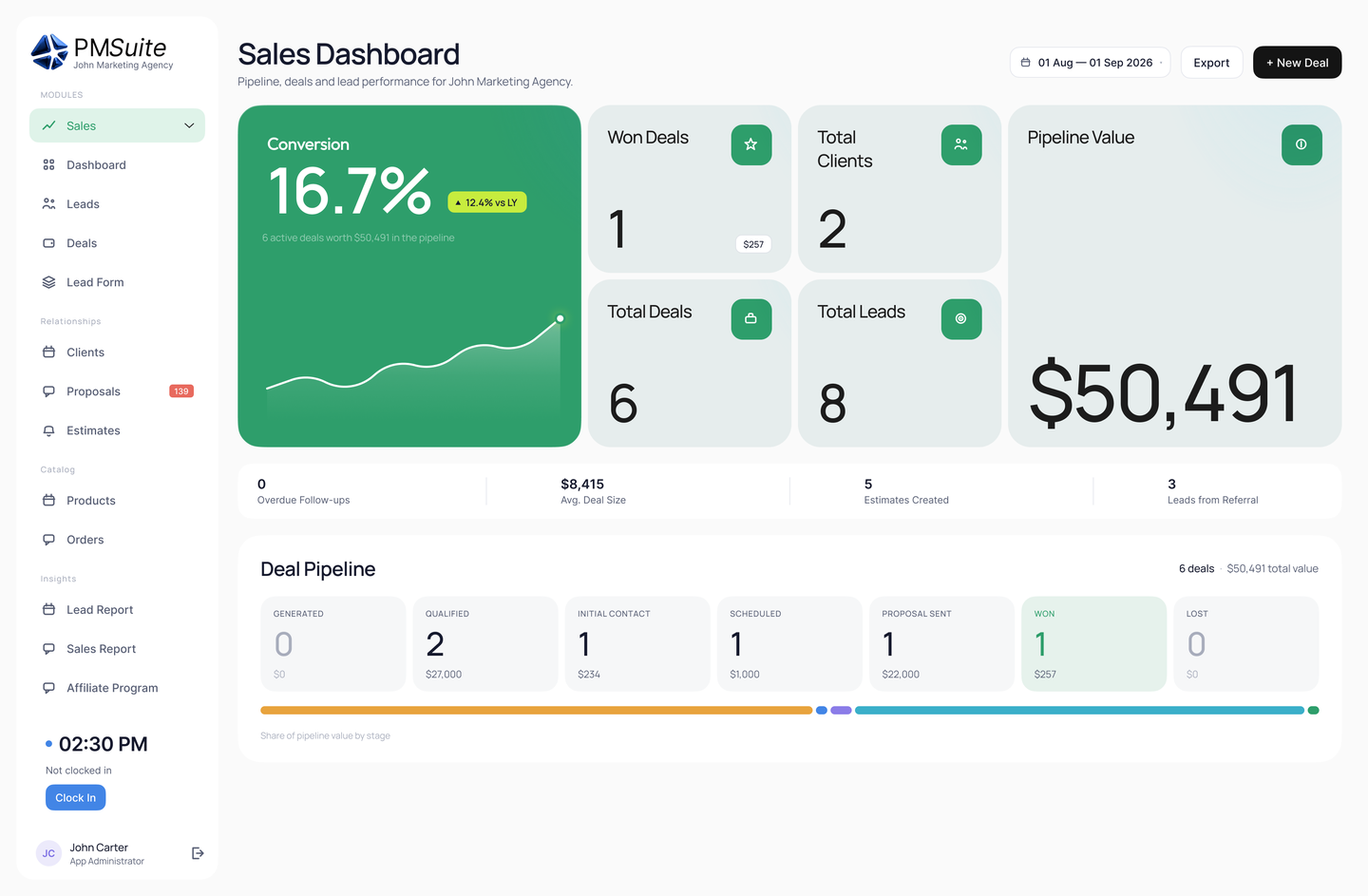
Track contracts through the sales pipeline and beyond with integrated CRM tools.
Key Contract Provisions
Certain provisions appear in most business contracts and deserve careful attention regardless of contract type. Understanding these common elements helps you evaluate contracts more effectively and negotiate better terms.
Term and termination provisions establish how long the contract lasts and how it can be ended. Auto-renewal clauses automatically extend contracts unless notice is given within a specified window. Termination for convenience allows ending without cause, typically with notice. Termination for breach provides exit when the other party fails to perform.
Liability and Indemnification
Liability provisions allocate risk between parties. Limitation of liability clauses cap damages one party can recover from the other. Indemnification provisions require one party to cover losses the other incurs from specified causes. These provisions have significant financial implications and warrant careful review.
Be cautious about unlimited liability exposure. Seek caps tied to contract value or insurance coverage. Carve out reasonable exceptions for willful misconduct or gross negligence. Balance risk allocation appropriately given each party's role and control.
Intellectual Property
Contracts involving creative work or custom development should clearly address intellectual property ownership. Who owns work product created during the relationship? What rights does each party have to use the other's pre-existing intellectual property? What happens to IP upon termination?
Work-for-hire provisions typically assign ownership to the paying party. Licensing provisions grant usage rights while retaining ownership. Ambiguous IP provisions create disputes that are expensive to resolve and may leave you without rights you assumed you had.
Confidentiality
Confidentiality provisions protect sensitive information shared during business relationships. Define what information is confidential, how it must be protected, permitted disclosures, and the duration of confidentiality obligations. Standard mutual NDAs work for many situations; high-value or sensitive relationships may warrant customization.
Consider what happens to confidential information upon termination. Destruction or return provisions prevent former partners from retaining your sensitive data indefinitely.
Contract Creation and Drafting
Starting from your own templates puts you in a stronger position than negotiating from the other party's documents. Your templates incorporate provisions that protect your interests and establish baselines favorable to you. Even when you ultimately accept some changes, starting from your position yields better outcomes.
Develop standard templates for your common contract types. Customer agreements, vendor terms, contractor agreements, and NDAs should all have pre-approved forms. Having templates ready accelerates deals and ensures consistent protection.
When to Use Lawyers
Legal counsel adds value for high-stakes contracts, unusual situations, and template creation. A lawyer reviewing a significant customer contract or creating your standard agreements pays for itself many times over through better protection and avoided disputes.
For routine contracts using established templates, legal review may not be necessary for every transaction. Train your team to recognize situations requiring escalation—unusual terms, significant deviation from standards, or high-value relationships. Reserve legal resources for where they add most value.
Plain Language Benefits
Complex legal language doesn't make contracts more enforceable—it makes them harder to understand and more likely to produce disputes. Plain language contracts clearly communicate terms so both parties understand their commitments. Courts interpret contracts according to their plain meaning; clarity serves everyone.
Avoid jargon and unnecessary complexity. Define technical terms when they must be used. Structure documents logically so readers can find relevant provisions. The goal is mutual understanding, not linguistic complexity.
Negotiation Strategies
Contract negotiation involves finding terms both parties can accept while protecting your core interests. Effective negotiation requires understanding your priorities, the other party's needs, and how to bridge differences constructively.
Identify your must-haves versus nice-to-haves before negotiating. What terms are genuinely non-negotiable? Where can you be flexible? This clarity enables strategic concessions that advance agreement while protecting essentials.
Common Negotiation Points
Certain provisions generate frequent negotiation. Payment terms—net 30 versus net 60, for example—affect cash flow. Liability caps and indemnification reflect risk appetite. Termination provisions determine flexibility. Pricing and scope define the economic exchange. Anticipate discussion on these points and prepare your positions.
Trade concessions strategically. If the other party wants something, use that desire to gain something you want. "We can accept net 45 payment terms if you'll agree to our standard warranty limitation." Linking concessions creates balanced exchanges.
Walking Away
Not every deal should close. When contract terms expose you to unacceptable risk or the economics don't work, walking away is the right choice. Knowing your alternatives—your "BATNA" in negotiation terms—enables confident decisions about when to accept and when to decline.
Communicate your limits clearly. "We can't accept unlimited liability—that's a deal-breaker for us." Clear statements focus negotiation on finding solutions rather than testing limits. They also demonstrate that you're serious about your position.
Contract Execution
Contract execution—the signing process—creates legally binding obligations. Handling execution properly ensures you have enforceable agreements with appropriate authority.
Verify signing authority before finalizing. Does the person signing have authority to bind their organization? For significant contracts, this may require board authorization or specific officer signatures. Getting the wrong signature can make contracts unenforceable.
Electronic Signatures
Electronic signatures are legally valid for most business contracts under federal and state law. E-signature platforms provide convenience, speed, and audit trails that paper signatures cannot match. They also ensure you retain signed copies automatically.
A few contract types still require physical signatures—real estate transactions, wills, and certain negotiable instruments among them. For routine business contracts, electronic signatures work well and accelerate execution significantly.
Version Control
Track contract versions carefully during negotiation. Confusion about which version was signed creates disputes and potential enforcement problems. Use clear version numbering, track changes between versions, and confirm final terms before execution.
Archive final signed versions immediately upon execution. You need to access signed contracts quickly when questions arise. A central repository with search capability serves this need far better than scattered email attachments.
Contract Storage and Organization
Finding contracts when you need them requires systematic storage and organization. Paper files in filing cabinets work but don't scale well and make retrieval time-consuming. Digital contract repositories offer search, accessibility, and organization that paper cannot match.
Organize contracts logically by type, counterparty, or both. Customer contracts might organize by customer name with sub-folders for different agreement types. Vendor contracts might organize by category (software, professional services, supplies) then by vendor. Choose an organization that matches how you'll search.
Metadata and Searchability
Contract metadata enables finding relevant agreements quickly. Key dates (execution, expiration, renewal), counterparty information, contract value, and key terms should be captured in searchable formats. This metadata supports both individual searches and portfolio-level analysis.
Contract management software typically captures and indexes this metadata automatically. For businesses not ready for specialized software, even spreadsheet tracking of key contract data dramatically improves visibility.
Access Control
Not everyone needs access to all contracts. Confidential terms, competitive information, and sensitive relationships warrant restricted access. Implement appropriate controls while ensuring those who need access can get it quickly.
Balance security with accessibility. Overly restrictive access creates workarounds that undermine security. Appropriate restrictions protect sensitive information while enabling legitimate business use.
Renewals and Expirations
Contract renewals represent both opportunities and risks. Renewals offer chances to renegotiate unfavorable terms or upgrade successful relationships. Missed renewal deadlines can result in unwanted auto-renewals or service interruptions. Proactive renewal management captures these opportunities while avoiding pitfalls.
Track renewal and expiration dates for all significant contracts. Set alerts well before deadlines—90 days for major contracts, 30 days for routine ones. This lead time enables evaluation and negotiation rather than rushed decisions.
Renewal Evaluation
Before renewing, evaluate whether the relationship should continue on current terms. Is the counterparty performing satisfactorily? Are there issues to address? Have market conditions changed? Are better alternatives available? Renewal should be a conscious choice, not automatic continuation.
Use renewals as negotiation opportunities. Even successful relationships can benefit from term improvements. Loyal customers or vendors may warrant better pricing or additional commitments. Renewal periods are natural times for these conversations.
Auto-Renewal Management
Auto-renewal clauses can trap you in unwanted commitments. Review new contracts for auto-renewal provisions and track notice requirements. Missing the cancellation window means living with the contract for another term or paying early termination penalties.
For contracts you want to continue, auto-renewal provides convenience. For contracts requiring evaluation, calendar the notice deadline with time to spare. Systematic tracking prevents unwanted auto-renewals while allowing intentional ones.
Contract Performance Monitoring
Signing a contract is just the beginning. Ongoing monitoring ensures both parties fulfill their obligations and identifies issues before they become disputes. This is particularly important for service contracts, where performance happens continuously over time.
Define key performance indicators tied to contract terms. For service contracts, these might include service levels, response times, and quality metrics. For supply contracts, delivery timeliness and product quality matter. Monitoring against these metrics identifies performance gaps early.
Documenting Performance
Document both good and problematic performance. Positive documentation supports renewal decisions and may be valuable in disputes. Problem documentation provides evidence if you need to exercise termination rights or seek damages.
Address issues promptly when they arise. Written communication documenting concerns and requesting correction creates records while giving the other party opportunity to improve. Patterns of documented issues support stronger positions if the relationship deteriorates.
Building Your Contract Management System
Effective contract management combines people, processes, and technology. Each element supports the others; weakness in any area undermines overall effectiveness.
Start by assessing your current state. Where are your contracts stored? Who manages renewals? How do you find contracts when you need them? What problems have you experienced? This assessment identifies priorities for improvement.
Implementation Approach
Build capability incrementally. Start with contract storage and organization—ensure you can find contracts when needed. Add renewal tracking to prevent missed deadlines. Develop standard templates for common contract types. Each improvement builds on prior progress.
Consider contract management software when your volume and complexity warrant it. These platforms centralize storage, automate alerts, track obligations, and provide visibility that manual methods cannot achieve. The investment makes sense when contract management consumes significant time or creates significant risk.
Taking Action: Next Steps
Improving contract management starts with understanding your current situation and prioritizing the highest-impact improvements. You don't need to transform everything at once; incremental progress yields significant benefits.
This week, inventory your existing contracts. Where are they stored? What's missing? What expires soon? This assessment reveals your starting point and urgent priorities.
Next week, organize your contract storage and set up renewal tracking. Even simple spreadsheets beat no tracking at all. Establish processes that prevent contracts from falling through cracks.
Remember that contracts exist to serve business relationships, not the reverse. Good contract management protects your interests while supporting productive partnerships. Keep that purpose central, and your contract management will serve your business well.
Keeping contracts next to the client records they belong to makes renewals easier to track. See how PMSuite’s CRM software organizes clients, deals and documents.
Streamline Your Contract Management
PMSuite brings CRM, contracts, and projects together in one platform. Track deals through the pipeline and manage contracts throughout their lifecycle.
Start Your Free TrialNo credit card required • 7-day free trial
PMSuite Team
Expert insights on business operations, sales, and contract management.